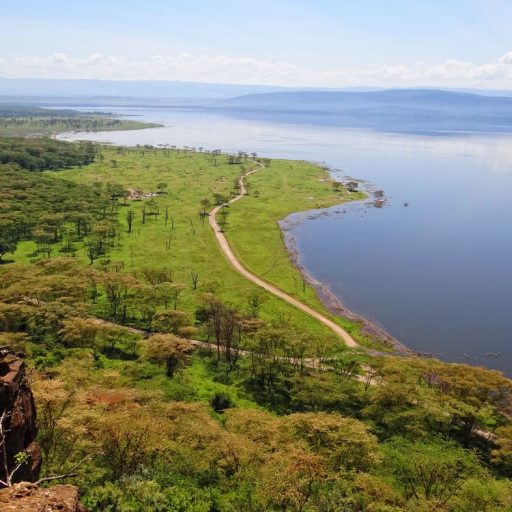
A premium wildlife sanctuary located on the floor of the Great Rift Valley, Lake Nakuru National Park is one of Kenya’s most iconic safari destinations. The park is famous for its breathtaking scenery, including dramatic Rift Valley escarpments, steep rocky cliffs, dense acacia forests, and panoramic viewpoints overlooking the lake and surrounding landscapes.
At the heart of the park lies Lake Nakuru, a shallow alkaline lake known worldwide for its spectacular birdlife. The park is especially famous for the pink-hued flamingos that gather along the shoreline, creating one of the most stunning natural displays in Africa.
Lake Nakuru National Park is also a critical wildlife sanctuary, home to over 100 endangered black and white rhinos, as well as the rare Rothschild’s giraffe. The combination of rich biodiversity, scenic beauty, and conservation importance makes it one of Kenya’s top safari destinations.
Lake Nakuru National Park is located in central Kenya within the Great Rift Valley, approximately 160 kilometers northwest of Nairobi. The park is easily accessible by road, with a travel time of about 2.5 to 3 hours from the capital.
Its location within the Rift Valley places it near other major attractions such as Lake Naivasha, making it a popular stop on Kenya’s safari circuit. The scenic drive into the park offers stunning views of escarpments and highland landscapes.
January – Warm and dry conditions with excellent wildlife visibility and clear views of flamingos along the lake.
February – Ideal safari weather with active wildlife and good photography conditions.
March – Beginning of long rains, with greener landscapes and occasional muddy tracks.
April – Peak rainy season; the park becomes lush and vibrant, though wildlife is more dispersed.
May – Rainfall reduces, and the park remains green with improving road conditions.
June – Start of the dry season with cooler temperatures and better wildlife sightings.
July – Excellent conditions for game viewing as animals gather near water sources.
August – Dry and pleasant weather with high chances of spotting rhinos and giraffes.
September – One of the best months for wildlife photography and birdwatching.
October – End of dry season with good visibility and active wildlife movement.
November – Short rains bring fresh vegetation and increased bird activity.
December – Lush scenery with abundant wildlife and festive-season visitors.
Lake Nakuru is the heart of the park and one of the most famous soda lakes in Africa. It attracts thousands of flamingos that line the shores, creating a pink-colored spectacle. The lake also supports pelicans, cormorants, and other water birds in large numbers. Its alkaline waters create a unique ecosystem different from most freshwater lakes. It offers stunning reflections of the Rift Valley escarpment, especially during sunrise and sunset.
Lake Nakuru National Park is one of Kenya’s most successful rhino conservation areas. It protects both black and white rhinos in a secure, fenced environment. Visitors have high chances of spotting rhinos during game drives across the park. The sanctuary plays a key role in breeding and protecting endangered species. It is one of the best places in East Africa to see rhinos up close in the wild.
Makalia Falls is a seasonal waterfall located in the southern part of the park. It becomes especially beautiful after heavy rains when water flow increases. The surrounding area is peaceful and ideal for picnics and relaxation. Wildlife such as antelopes and birds are often seen near the falls. It offers a hidden natural escape away from the main safari routes.
Baboon Cliff is one of the most famous viewpoints in the park. It offers panoramic views of Lake Nakuru, the forest, and surrounding escarpments. The viewpoint is ideal for photography, especially during early morning and sunset. Baboons are commonly seen around the area, adding to the experience. It provides one of the best elevated safari views in the entire Rift Valley.
Lake Nakuru National Park is home to a wide range of wildlife species including buffaloes, zebras, waterbucks, impalas, warthogs, and baboons. It is especially famous for its successful rhino conservation program, making it one of the best places in Kenya to see both black and white rhinos.
The park also supports endangered Rothschild’s giraffes, which are frequently seen in the woodland areas. Birdlife is exceptional, with flamingos, pelicans, cormorants, and fish eagles dominating the lake environment, making it a paradise for birdwatchers.
Book a free 30-minute call to get personalized advice about safaris, Kilimanjaro routes, and the best times to visit.
Gipson
Lake Nakuru National Park was established in 1961 as a bird sanctuary to protect its rich avian population, especially flamingos. Over time, it expanded to include surrounding ecosystems and became one of Kenya’s first rhino sanctuaries.
The park has played a key role in wildlife conservation, particularly in protecting endangered rhino and giraffe populations. Today, it remains a flagship conservation area within Kenya’s national park system and a major attraction in the Rift Valley safari circuit.
Lake Nakuru National Park is famous for its flamingos and large rhino population. Lake Nakuru is the main attraction with thousands of birds. The park is also known for Rothschild’s giraffes and rich biodiversity. Its scenic Rift Valley landscapes make it one of Kenya’s top safari parks. It is a UNESCO-recognized ecosystem and a key conservation area in Kenya.
Most visitors spend 1 to 2 days exploring the park comfortably. A one-day trip is enough for game drives and major viewpoints. Two days allow more relaxed wildlife viewing and photography time. Extra time helps explore birdlife and hidden scenic spots. It is often combined with nearby parks like Lake Naivasha.
The best time is during the dry seasons from June to October and January to February. Wildlife is easier to spot around water sources during this period. Roads are more accessible and game drives are smoother. Birdwatching is excellent throughout the year, especially near the lake. The park is also beautiful during the green season with lush scenery.
The park is home to both black and white rhinos. You can also see giraffes, buffaloes, zebras, and antelopes. Lake Nakuru attracts thousands of flamingos and pelicans. Baboons and other primates are commonly seen in forest areas. It is one of the best wildlife diversity parks in Kenya.
Yes, it is one of the best birdwatching destinations in Africa. The lake attracts flamingos, pelicans, fish eagles, and cormorants. Over 400 bird species have been recorded in the park. Different habitats support both water and forest bird species. It is a paradise for photographers and bird enthusiasts.
Yes, it is often combined with nearby Rift Valley attractions. Lake Naivasha is a popular nearby stop. Visitors also combine it with Maasai Mara for extended safaris. The park fits well in Kenya’s northern safari circuit. This makes it ideal for multi-destination safari itineraries.