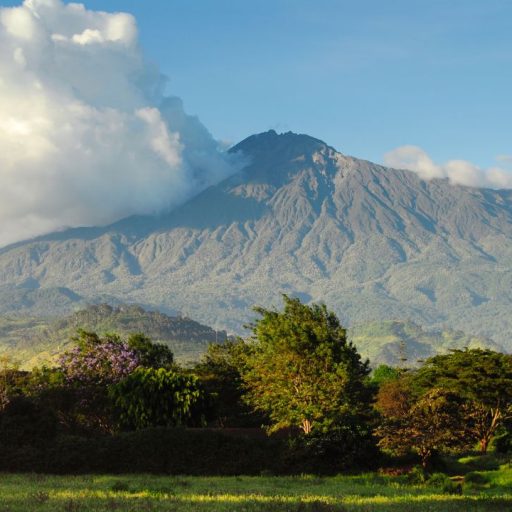
January – January is part of the green season, with lush vegetation and active wildlife. Animals such as giraffes, zebras, and buffaloes are easily seen grazing across the plains. Birdwatching is excellent, with migratory species present. Clear views of Mount Meru are often visible in the mornings, making it a great time for photography and scenic exploration.
February – February continues with green landscapes and warm temperatures. Wildlife remains active and visible, especially during early morning and late afternoon game drives. Birdlife is abundant, and the park is relatively quiet, allowing for a peaceful safari experience.
March – March marks the start of the long rains. The park becomes greener and more scenic, though some tracks may become muddy. Wildlife is still present, and birdwatching remains a highlight. Mist often surrounds Mount Meru, creating dramatic and picturesque views.
April – April is one of the wettest months, with heavy rainfall making some areas difficult to access. However, the park is incredibly lush and vibrant. Wildlife viewing can be slower due to dense vegetation, but birdwatching is excellent, and the park is very quiet with few visitors.
May – Rainfall begins to decrease toward the end of May. The park remains green and full of life, with animals grazing across the plains. Birdlife is abundant, and the scenery is ideal for photography. This is a peaceful time to visit with minimal crowds.
June – June marks the beginning of the dry season. Vegetation starts to thin, making wildlife easier to spot. Cooler temperatures make game drives and walking safaris comfortable. Clear skies improve visibility of Mount Meru.
July – July offers excellent conditions for safari. Wildlife is more concentrated, and animals are easier to locate. The dry weather makes walking safaris and canoeing enjoyable. Clear views and crisp air enhance the overall experience.
August – August continues the dry season with great wildlife viewing opportunities. Animals gather around water sources, and birdlife remains active. The park is still relatively uncrowded compared to other northern parks.
September – September is ideal for wildlife viewing. Dry conditions make animals easier to spot, and the landscapes provide excellent photographic opportunities. The weather is pleasant, making it a great time for outdoor activities.
October – October is the end of the dry season, with rising temperatures. Wildlife remains visible near water sources, and the scenery is still open for easy viewing. The park remains accessible and rewarding.
November – Short rains begin in November, refreshing the park’s vegetation. Wildlife disperses slightly, but birdwatching improves with the arrival of migratory species. The landscapes become green and vibrant again.
December – December is lush and scenic, with active wildlife and abundant birdlife. Visitor numbers increase slightly during the holiday season, but the park remains a peaceful and rewarding destination.

 Dutch
Dutch Spanish
 French
 Russian
 Chinese (Simplified)