
Life in a Boma
Step inside a traditional house, built by the women of the family from poles, grass, mud and cow dung, and learn how the home is organised around the livestock.

Climbing Kilimanjaro
The complete guideRoutes & fitness calculatorWhat to packOur climbs
6-Day Kilimanjaro: Marangu Route7-Day Kilimanjaro: Machame Route6-Day Kilimanjaro: Umbwe Route7-Day Kilimanjaro: Rongai Route7-Day Kilimanjaro: Shira Plateau / Morrum Barrier Route9-Day Kilimanjaro: Lemosho Route4-Day Mount Meru Trek5-Day Ol Doinyo Lengai & Lake Natron Trek10-Day Kilimanjaro Trekking & Wildlife Safari11-Day Kilimanjaro Trekking & Wildlife SafariTour styles
Big 5 Safaris (7)Great Migration Safaris (6)Classic Wildlife Safaris (32)Wildlife-Themed Safaris (8)Fly-in & Luxury Safaris (8)Honeymoon Safaris (6)Mountain Trekking (10)Beach & Zanzibar Holidays (9)Gorilla & Primate Safaris (19)Multi-Country & Combination Safaris (9)Helicopter Safaris (5)Cultural Tours (2)Day Trips (10)Family SafarisCity Tours & Airport TransfersTailor-Made / Custom TripsPlan
All toursTanzania safari guidePlan a custom tripTanzania
All of TanzaniaNational ParksGame ReservesIslandsHistorical SitesMountains & VolcanoesLakes & WaterfallsCities & CoastKenya
All of KenyaNational ParksReserves & ConservanciesMountains & CoastCitiesUganda
All of UgandaNational ParksWildlife ReservesLakes & WaterfallsCities & GatewaysMore
Cultural experiencesLodges & campsAll destinationsTanzania Cultural Experiences
Across the plains and highlands of northern Tanzania, the Maasai still herd their cattle, raise their children and celebrate their rites of passage much as their ancestors did. Spending time with a Maasai community is one of the most memorable parts of any safari.
Discover the Maasai
The Maasai are a Nilotic people of East Africa, living mostly in Kenya and Tanzania. In Tanzania their communities are found across the north of the country, in the lands around Arusha, Monduli, Longido, Simanjiro, Lake Natron and the Ngorongoro Conservation Area, while in Kenya they live mainly in the south and centre of the country. They speak Maa and are among the best-known peoples in Africa, partly because so many of their lands border famous parks, reserves and game controlled areas, and partly because of their distinctive customs and dress.
Many Maasai still follow a semi-nomadic, pastoralist way of life built around cattle, goats and sheep, moving herds between grazing and water as the seasons change. Families live in a boma, a cluster of houses enclosed by a thorn fence that protects the livestock at night, and age-old customs continue to shape daily life, from the role of young warriors (moran) to the wisdom of the elders.
Today the Maasai also balance tradition with change: children go to school, many families farm as well as herd, and community tourism has become an important source of income. A respectful visit, arranged with the community and guided by Maasai hosts, is the best way to understand this living culture.
Why visit
A visit to a Maasai community adds a human story to the wildlife of the northern circuit.
Step inside a traditional house, built by the women of the family from poles, grass, mud and cow dung, and learn how the home is organised around the livestock.
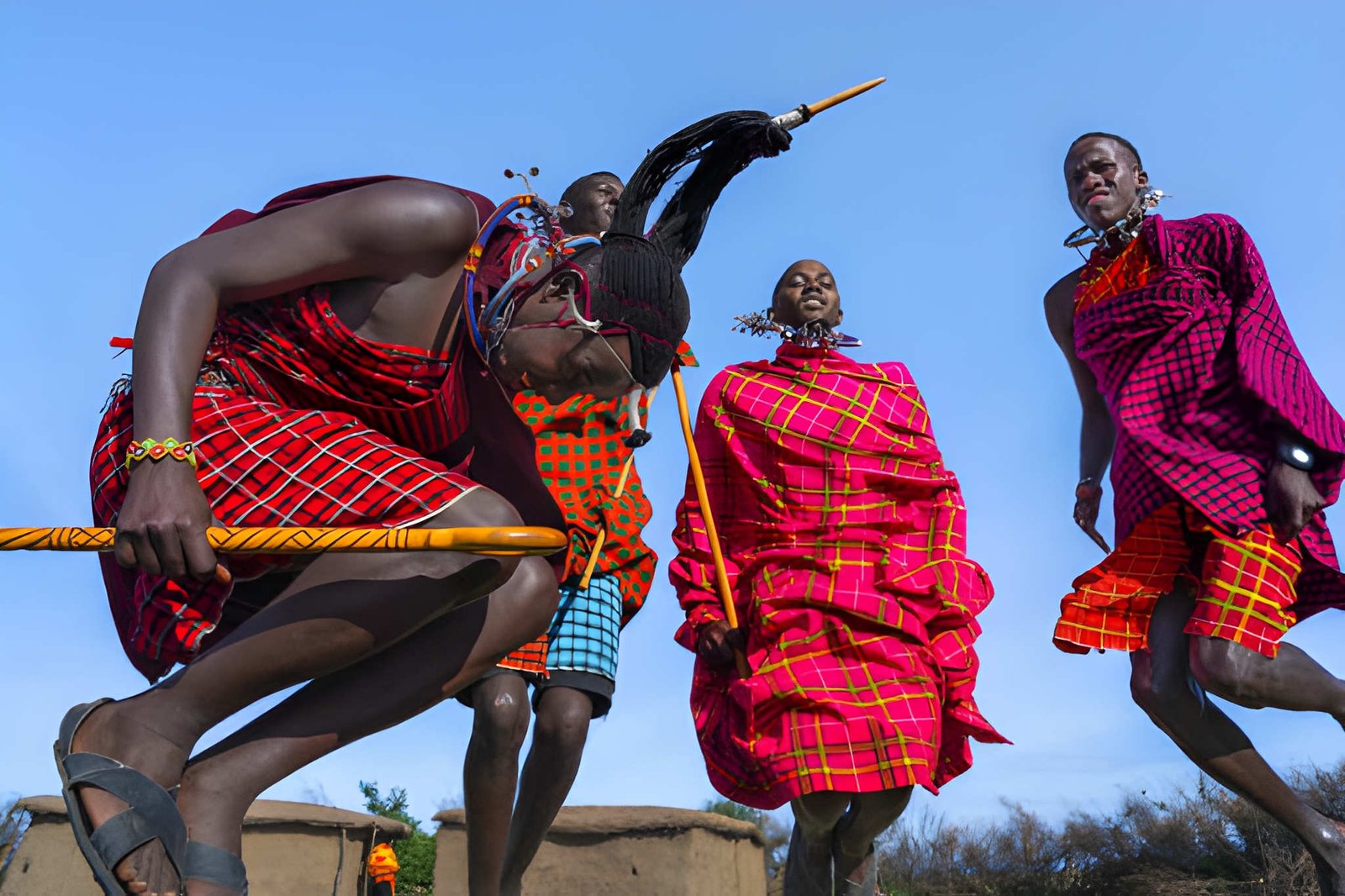
Hear the layered harmonies of Maasai singing, led by a song leader, and watch the famous jumping dance of the young men.
Learn why cattle mean wealth, food, status and faith, and walk out with herders as they take the animals to graze.
Discover how the colours of the shuka and the patterns of beadwork speak of age, status and identity.
Walk with a warrior guide and learn how plants are used for medicine, tools and building.
Maasai communities live along the road to Tarangire, Ngorongoro, the Serengeti and Lake Natron, so a visit fits easily into most safaris.
Location
Maasai communities live throughout northern Tanzania. Popular places for a visit include the villages near Mto wa Mbu and Lake Manyara, the bomas of the Ngorongoro Conservation Area, the plains around Monduli and Longido north and west of Arusha, and the remote country of Lake Natron. Many are between one and four hours' drive from Arusha, and Kilimanjaro International Airport is about an hour east of Arusha.
We usually combine a Maasai visit with a game drive the same day, or arrange a longer stay with a host family for travellers who want to slow down and take part in daily life.
When to visit
Maasai communities can be visited all year, though the seasons change the landscape and daily rhythm of herding life.
Cool mornings, dry plains and clear skies; herders travel further to find grazing and water, and this is the busiest safari season.
Brief afternoon showers turn the plains green and the cattle return to grazing closer to home.
Warm, settled weather between the rains, ideal for village visits and walks with herders.
Heavy rain can make rural tracks muddy; visits remain possible but are best planned with flexibility.
Every month offers something different in Maasai country.
Warm, dry weather and green grazing make January a lovely time to walk with herders.
Calving season on the plains brings new life to the herds and the wider landscape.
The long rains begin, freshening the grass and filling water points around the bomas.
The wettest month, when rural tracks can be muddy and visits need flexible timing.
The rains ease and the countryside is at its greenest.
The dry season begins, with cool mornings and dusty red roads.
Cool, clear and dry, a popular month for combining culture with safari.
Herders walk longer distances to water, and village life is busy and lively.
Dry and warm, with excellent light for photography in the highlands.
Late dry season, when the plains are golden and water is precious.
The short rains arrive and the grass begins to return.
Green, warm and festive, a cheerful month to visit a community.
Explore the area
Several areas of northern Tanzania offer meaningful encounters with the Maasai.

Spotlight
Arrive at the boma and you are welcomed by the family with song. Your Maasai guide explains how the homestead is laid out, invites you inside a house built by the women, and introduces the stages of life from childhood to warriorhood and elderhood. You may walk out with the herders and their cattle, learn how a fire is made with sticks, or sit with the women as they work on beadwork.
The visit is arranged with the community, which sets its own fee and decides how it is shared. Ask before taking photographs, take time to talk rather than just watch, and you will leave with a genuine understanding of how the Maasai live today.
Safaris to 中文
Safaris and cultural tours that include time with Maasai communities.
Tanzania · 5 days
Serengeti · Ngorongoro
Tanzania · 5 days
Serengeti · Ngorongoro
Tanzania · 6 days
Ngorongoro · Serengeti
Tanzania · 6 days
Ngorongoro · Serengeti
Tanzania · 5 days
Serengeti
Tanzania · 6 days
Serengeti · Ngorongoro
Tanzania · 10 days
Serengeti · Ngorongoro
Tanzania · 6 days
Ngorongoro · Serengeti
Tanzania · 7 days
Ngorongoro · Serengeti

Tell us how much time you have and how deeply you would like to engage. A Gip Adventure specialist will arrange a respectful, community-led visit, from a short village stop on safari to a stay with a host family.
Usually replies within minutesHeritage
According to Maasai oral history, the people originated in the lower Nile Valley north of Lake Turkana and began moving south around the 15th century, reaching the long stretch of land from northern Kenya to central Tanzania between the 17th and 18th centuries. Their warriors earned a formidable reputation as cattle raiders armed with spears, shields and the orinka, a wooden throwing club said to be accurate over long distances. Nineteenth-century slave caravans avoided Maasai territory, and it was among the last parts of East Africa to be entered by Europeans.
Rites of passage mark every stage of life. Boys become men through circumcision, a ceremony that marks the move from boyhood to manhood, and heads are shaved at many ceremonies to symbolise a fresh start in a new chapter of life. Ear piercing and the stretching of earlobes are traditional forms of body adornment. Clothing changes with age and place, and colours carry meaning, with red the most famous. Music is sung rather than played: a song leader, the olaranyani, sings the melody while a chorus answers in harmony, the singers moving their necks forward as they breathe out and back as they breathe in.
The traditional diet centres on milk, meat and blood from the herds, together with soups made from barks and roots, and honey. The Maasai are monotheists who believe in one God, Enkai, who has a dual nature: the benevolent Enkai Narok, the Black God, and the vengeful Enkai Nanyokie, the Red God. Tradition holds that God gave all cattle to the Maasai, which is why, in the past, raiding cattle from other peoples was seen as taking back what was rightfully theirs.
Mainly in the north: around Arusha, Monduli, Longido, Simanjiro, Lake Natron and the Ngorongoro Conservation Area.
Yes. Village visits are easy to add on the way to Lake Manyara, Ngorongoro or the Serengeti and usually take one to two hours.
Yes, when the visit is arranged with the community and guided by Maasai hosts. Listen, ask questions and follow your guide's advice on etiquette.
Always ask first. Many people are happy to be photographed once you have been introduced, but some prefer not to be.
Comfortable, modest clothing and closed shoes; the ground around a boma can be dusty and thorny.
Yes, communities charge a visitor fee that supports the village. Your guide will arrange it in advance.
Yes, beadwork made by Maasai women is usually on sale, and buying directly supports the artisans.
Yes, Maasai homestays let you spend a night or more with a host family and take part in daily life.
Your safari starts here
Let Gip Adventure add an honest, respectful encounter with the Maasai to your northern Tanzania safari.
Chat with usOnline