
Mountain Gorillas
Trek through the forest with expert rangers and trackers to spend a magical hour with a habituated gorilla family, observing their behaviour, family bonds and daily life at close range.

Climbing Kilimanjaro
The complete guideRoutes & fitness calculatorWhat to packOur climbs
6-Day Kilimanjaro: Marangu Route7-Day Kilimanjaro: Machame Route6-Day Kilimanjaro: Umbwe Route7-Day Kilimanjaro: Rongai Route7-Day Kilimanjaro: Shira Plateau / Morrum Barrier Route9-Day Kilimanjaro: Lemosho Route4-Day Mount Meru Trek5-Day Ol Doinyo Lengai & Lake Natron Trek10-Day Kilimanjaro Trekking & Wildlife Safari11-Day Kilimanjaro Trekking & Wildlife SafariTour styles
Big 5 Safaris (7)Great Migration Safaris (6)Classic Wildlife Safaris (32)Wildlife-Themed Safaris (8)Fly-in & Luxury Safaris (8)Honeymoon Safaris (6)Mountain Trekking (10)Beach & Zanzibar Holidays (9)Gorilla & Primate Safaris (19)Multi-Country & Combination Safaris (9)Helicopter Safaris (5)Cultural Tours (2)Day Trips (10)Family SafarisCity Tours & Airport TransfersTailor-Made / Custom TripsPlan
All toursTanzania safari guidePlan a custom tripTanzania
All of TanzaniaNational ParksGame ReservesIslandsHistorical SitesMountains & VolcanoesLakes & WaterfallsCities & CoastKenya
All of KenyaNational ParksReserves & ConservanciesMountains & CoastCitiesUganda
All of UgandaNational ParksWildlife ReservesLakes & WaterfallsCities & GatewaysMore
Cultural experiencesLodges & campsAll destinationsUganda National Parks
Mist-wrapped ridges, tangled ancient rainforest and the unforgettable gaze of a wild mountain gorilla: Bwindi is one of the great wildlife encounters on Earth.
Discover Bwindi
Bwindi Impenetrable National Park, also known as Bwindi Forest National Park, is a true tropical rainforest clinging to steep, folded hills on the edge of the Albertine Rift in southwestern Uganda. Bordered by the Democratic Republic of Congo on its western side and reached via the highland town of Kabale, the park covers 331 km² and ranges from 1,190 to 2,607 metres above sea level, with around 60% of its area lying above 2,000 metres. Temperatures are pleasantly mild, with average minimums of 7–15°C and maximums of 20–27°C.
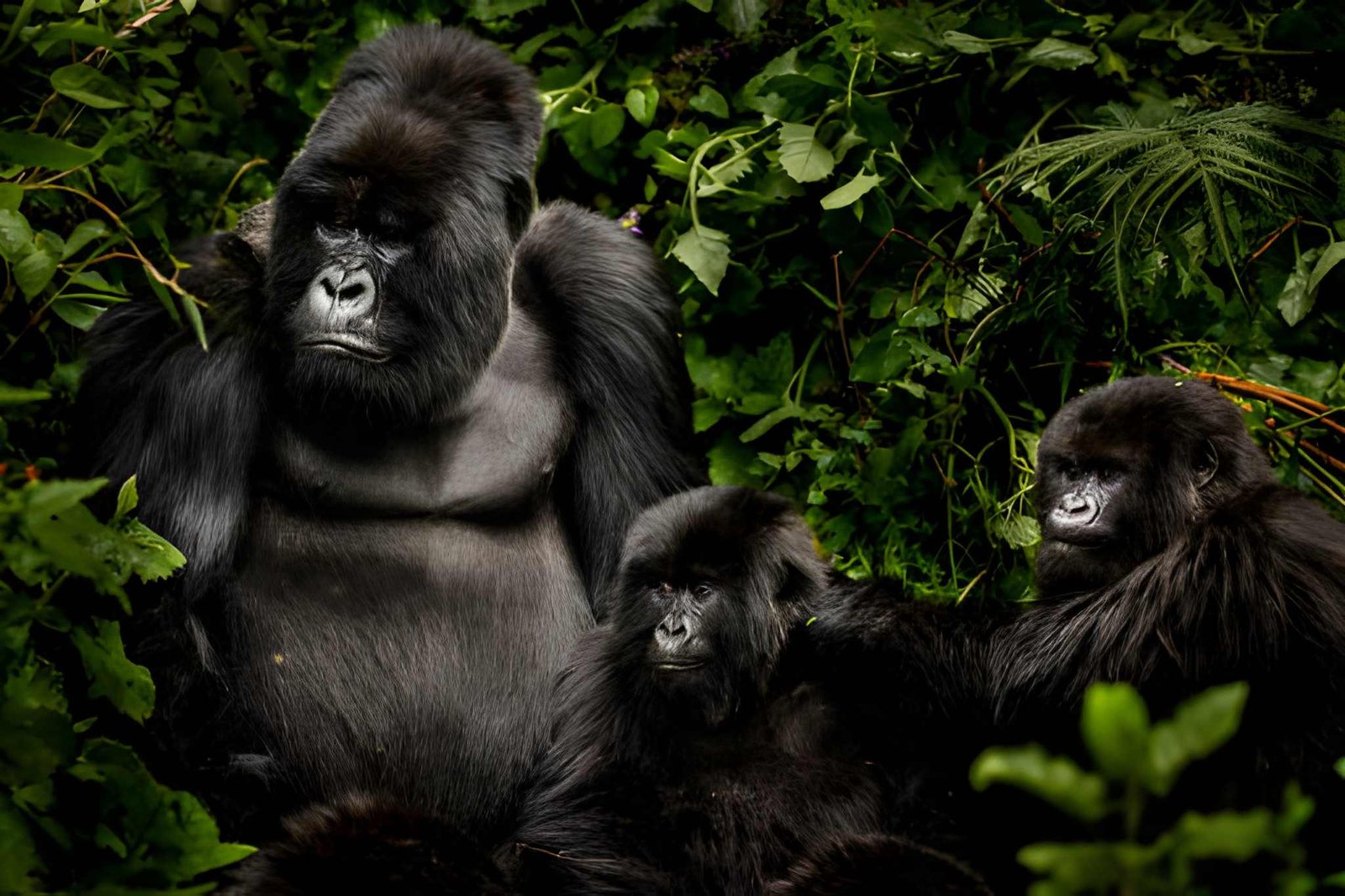
Bwindi is famous around the world for gorilla trekking. It protects almost half of the world's remaining mountain gorillas, and its habituated gorilla families are spread across four trekking sectors: Buhoma, Ruhija, Rushaga and Nkuringo. Spending an hour with a family of gorillas, watching silverbacks, mothers and playful youngsters go about their day, is a moment few travellers ever forget.
Yet Bwindi is much more than gorillas. This ancient forest shelters many other primates and mammals, more than 320 bird species, dazzling butterflies and an extraordinary variety of trees and ferns. Around the park, the Batwa people, the forest's original hunter-gatherer inhabitants, share their traditions, while hiking trails, village walks and biking safaris reveal the rhythm of life in the green hills of Kigezi.
Why Bwindi
Few places offer such an intimate encounter with wildlife. Combine that with ancient forest, outstanding birding and rich local culture and Bwindi becomes the heart of any Uganda safari.
Trek through the forest with expert rangers and trackers to spend a magical hour with a habituated gorilla family, observing their behaviour, family bonds and daily life at close range.
Buhoma, Ruhija, Rushaga and Nkuringo each have their own gorilla families, landscapes and lodges, giving flexibility to match your route and fitness.
Bwindi is one of Africa's oldest and most biologically diverse forests, a dense world of giant trees, tree ferns, vines and mist-filled valleys.
More than 320 bird species, including many Albertine Rift endemics, make Bwindi one of the finest forest birding destinations in Africa.
Meet the Batwa, the forest's original people, and learn about their hunting skills, medicinal plants, songs and stories of life in the forest.
Designated hiking trails, waterfall walks and village bike rides let you explore the park and its surroundings at a gentle pace.
Location
Bwindi lies in the far southwest of Uganda, on the edge of the Albertine Rift and along the border with the Democratic Republic of Congo. By road it is roughly 460–550 km from Kampala, depending on the sector, a journey of about 8 to 10 hours via Mbarara and Kabale; travellers starting at Entebbe International Airport should allow around an hour more. Many guests break the journey with a night at Lake Mburo or combine Bwindi with Queen Elizabeth National Park, which connects to Buhoma via the Ishasha sector.
The southern sectors of Rushaga and Nkuringo are also well placed for travellers flying into Kigali, Rwanda, about 4 to 5 hours away by road via the Katuna or Cyanika borders, while Buhoma and Ruhija take a little longer. For a quicker journey, scheduled and charter flights connect Entebbe with the airstrips at Kihihi (best for Buhoma) and Kisoro (best for Rushaga and Nkuringo).
When to visit
Gorillas can be trekked all year round, but the forest's weather shapes how muddy the trails are, how far you may walk and how the scenery looks.
The most popular time to trek, with drier trails, less fog and easier hiking conditions. Showers become more frequent later in the period, and permits are in high demand.
A second excellent window, with generally drier conditions, clear mornings and good visibility in the forest. Festive dates book up quickly.
The wettest months, with heavy showers and slippery slopes. The forest is lush and quiet, gorillas are still found daily and lodges are less busy.
Regular afternoon showers and lush greenery. Trekking continues as normal, with fewer visitors and fresh, vibrant forest.
The driest months from mid-June to October and from December to March make trekking easiest, but every month offers a real chance to meet the gorillas.
A dry and popular month, with clear mornings and comfortable trekking conditions.
One of the driest months of the year, ideal for trekking and forest birding.
Mostly dry early on, with rains beginning to build towards the end of the month.
The long rains set in, bringing muddy trails, lush forest and fewer visitors.
Often wet, with steep slippery slopes, though gorillas are tracked every day.
The rains ease and the main dry season begins from mid-June, with demand rising quickly.
Peak trekking season, with drier trails, good visibility and full lodges.
Excellent conditions in the forest, and one of the busiest months for permits.
Good trekking continues, with occasional showers and the forest in fine condition.
Still a good month to trek, though rain becomes more frequent as it progresses.
Short rains bring regular showers, quieter trails and vivid green scenery.
Drier weather returns and festive season trekking is popular, so book well ahead.
Explore the area
Each sector has its own habituated gorilla families, trailheads and lodges. Your permit is issued for a specific sector, so choosing the right one is an important part of planning.
Wildlife
Bwindi's great age and range of altitudes have created exceptional biodiversity. Alongside the mountain gorillas, the forest supports around 120 species of mammals, including chimpanzees, L'Hoest's monkeys, black-and-white colobus, red-tailed monkeys, forest elephants and several species of shy forest duiker.
For birders, more than 320 species have been recorded, among them many Albertine Rift endemics such as Rwenzori turaco and the rare African green broadbill. Clouds of butterflies gather along forest streams and trails, while giant tree ferns, mosses and orchids give the forest its primeval character. Most species other than gorillas are seen on forest walks rather than game drives, so patience and a good guide are rewarded.
Where to look: All four trekking sectors with a permit
The reason most visitors come. Habituated families are located daily by trackers, and you spend one unforgettable hour in their company.
Where to look: Deep forest, mainly around Buhoma and lower areas
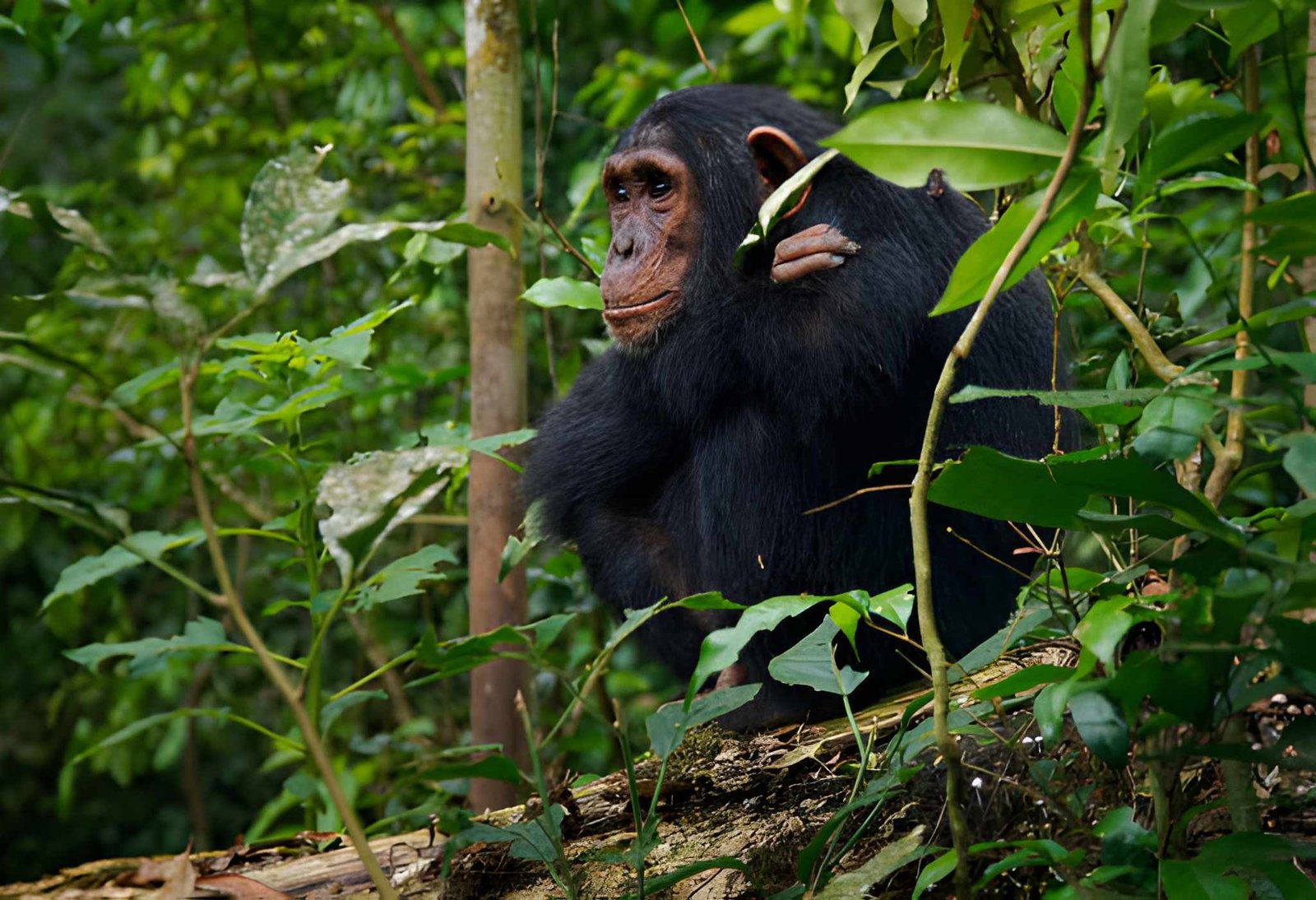
Chimpanzees live in Bwindi but are not habituated for tracking here, so a sighting is a rare bonus.
Where to look: Forest edges and trails across the park
A handsome, mostly ground-dwelling monkey with a striking white beard, often seen along trails.
Where to look: Forest canopy and edges near lodges
Graceful leaf-eaters with flowing white capes, frequently seen leaping between trees.
Where to look: Forest canopy, especially around Buhoma
Small, lively monkeys with white nose spots and bright red-brown tails.
Where to look: Mid and upper canopy
A quiet forest monkey usually seen in small family groups feeding in the trees.
Where to look: Remote forest areas, notably around Ruhija
Smaller than savannah elephants and very elusive; you are more likely to see their tracks and dung than the animals themselves.
Where to look: Forest floor throughout the park
Shy forest antelopes such as black-fronted and yellow-backed duikers dart across trails at first light.
Where to look: Forest canopy across the park
A spectacular turquoise-and-yellow bird, often heard calling before it is seen gliding between trees.
Where to look: Mubwindi Swamp trail near Ruhija
A rare Albertine Rift speciality and one of the most sought-after birds in East Africa.
Where to look: Higher-altitude forest, especially Ruhija
A colourful Albertine Rift endemic that delights birders in the upper forest.
Where to look: Sunny trails and streams
Bwindi is home to a remarkable variety of butterflies, including several species found only in the Albertine Rift.

Gorilla Trekking
Your trek begins with an early morning briefing at the sector headquarters before you set off with an experienced ranger guide and trackers. Depending on where the gorilla family spent the night, the walk can take from under an hour to several hours through steep, thick forest, with porters available to carry your bag and lend a hand on the slopes.
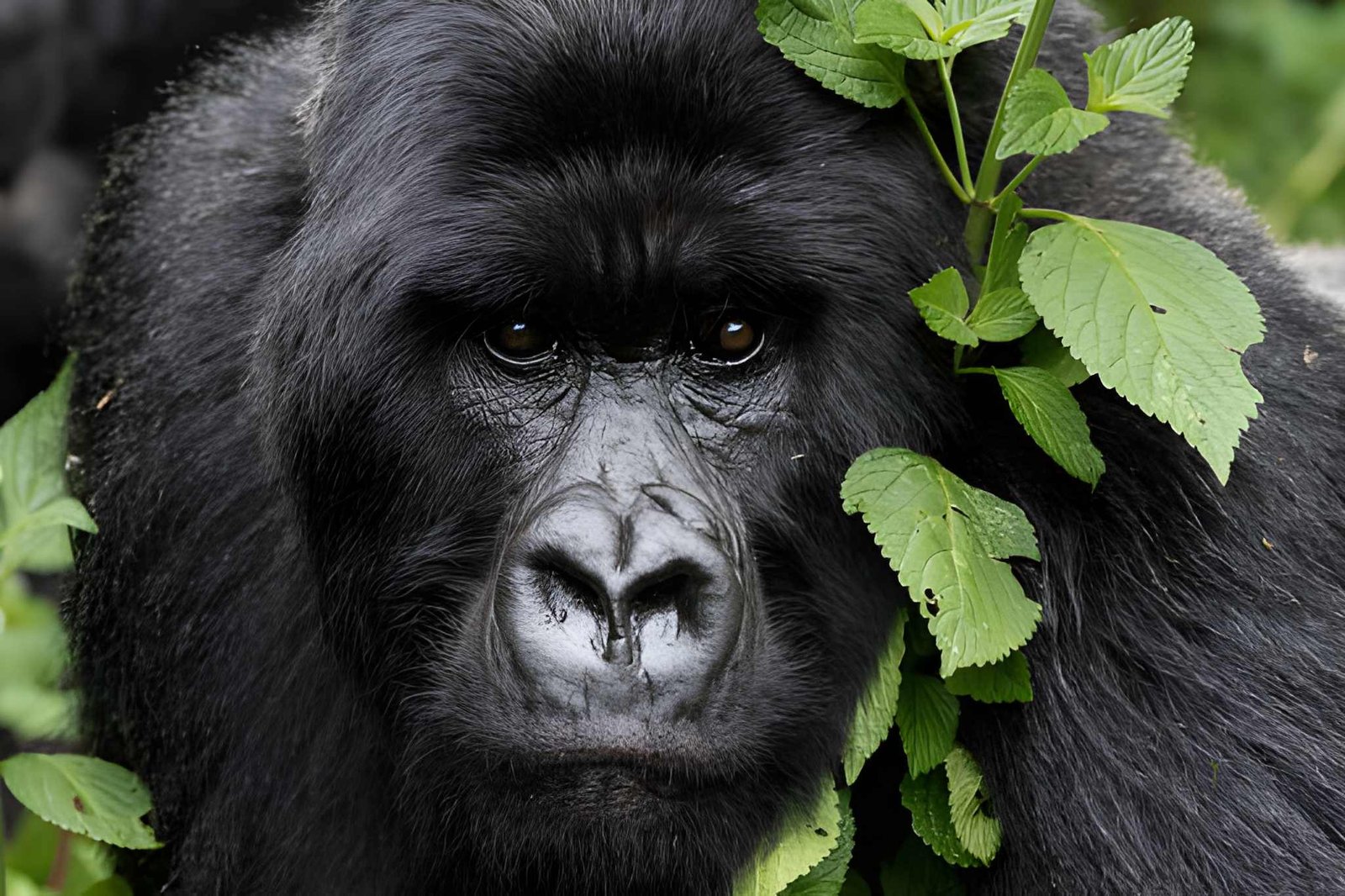
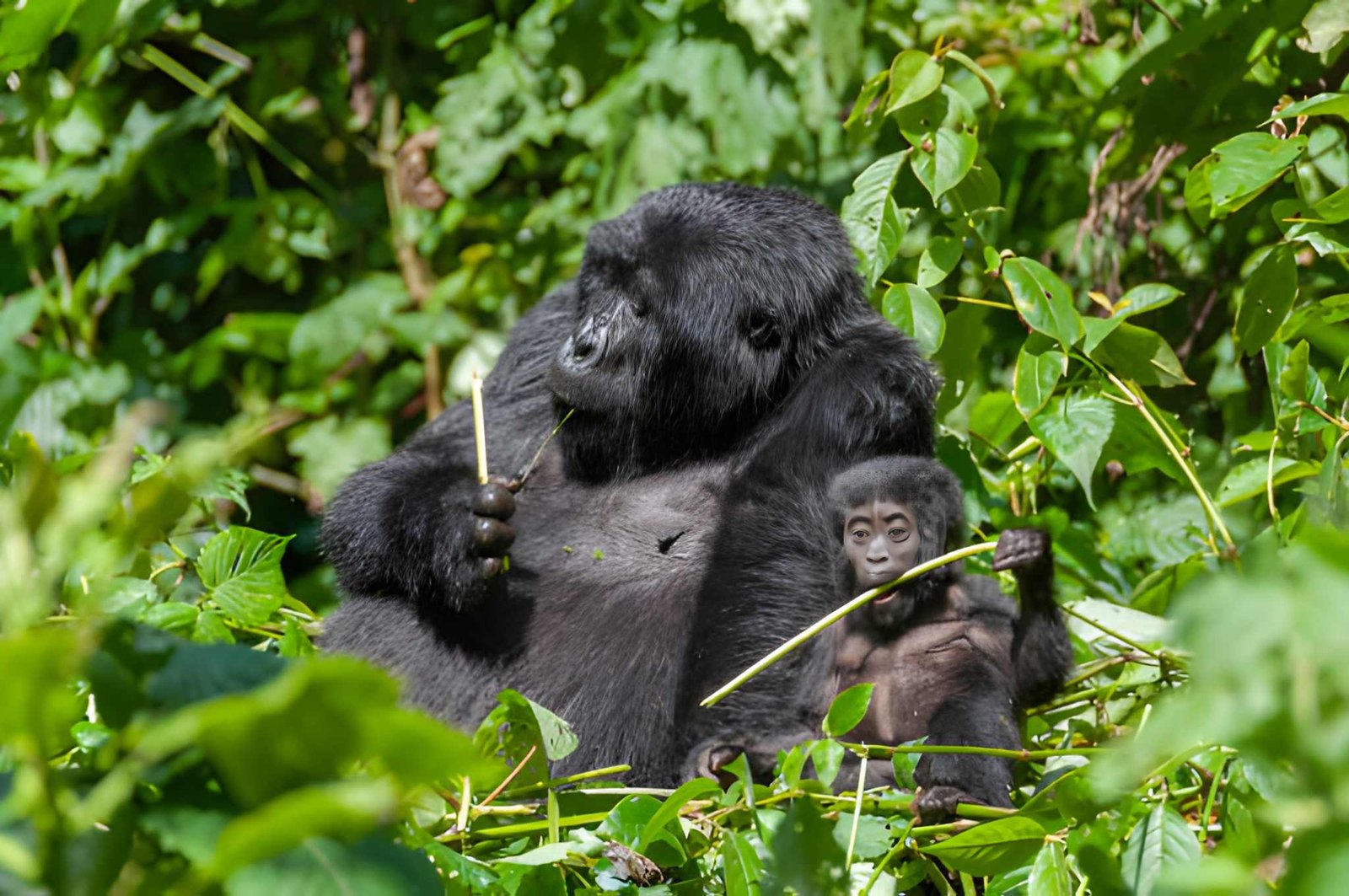
When you reach the family, cameras go up and voices drop. For one hour you watch the silverback keep watch, mothers cradle their infants and youngsters tumble and play just metres away. It is an encounter that captures a glimpse of what gorillas look like, how they live and the forest they depend on, and it supports their protection and the communities around the park.
Safaris to 中文
Itineraries that include gorilla trekking in Bwindi, from short trips starting in Kigali to longer Uganda journeys combining chimpanzees, savannah and lakes.
Uganda · 3 days
Bwindi
Uganda · 4 days
Bwindi · Lake Mburo
Uganda · 5 days
Bwindi · Lake Bunyonyi · Lake Mburo
Uganda · 6 days
Bwindi · Queen Elizabeth · Lake Bunyonyi
Uganda · 7 days
Lake Mutanda · Queen Elizabeth · Lake Bunyonyi
Uganda · 8 days
Bwindi · Queen Elizabeth · Lake Bunyonyi
Uganda · 9 days
Lake Mburo · Kibale Forest · Queen Elizabeth · Bwindi
Uganda · 8 days
Kibale Forest · Queen Elizabeth · Bwindi · Lake Bunyonyi
Uganda · 9 days
Lake Mburo · Queen Elizabeth · Bwindi · Lake Bunyonyi

Gorilla permits are limited and sell out early, so tell us your dates and how you would like to travel. A GIP Adventure specialist will secure the right sector, lodge and route for you.
Usually replies within minutesHeritage
For thousands of years, the forests of Bwindi were home to the Batwa, hunter-gatherers who lived in harmony with the forest, gathering honey, fruits and medicinal plants. Later, farming communities of the Bakiga and Bafumbira settled the surrounding hills, creating the patchwork of terraced fields that frames the park today. The name Bwindi is often linked to a local word describing a dark, impenetrable place of swamps and mist.
The forest was first protected as a forest reserve in the colonial era and became a national park in 1991, opening for gorilla tourism in 1993. In 1994 it was inscribed as a UNESCO World Heritage Site for its outstanding biodiversity. When the park was created, the Batwa were moved from the forest, and today cultural experiences led by Batwa communities help preserve their heritage and provide income.
Gorilla tourism has become one of Africa's great conservation success stories. Permit revenue funds protection, ranger patrols and veterinary care, while a share goes to neighbouring communities for schools, health centres and roads, giving local people a direct stake in keeping the forest and its gorillas safe.
A reasonable level of fitness is needed. Treks can last from under an hour to six hours or more over steep, muddy terrain at altitude. Walking sticks and porters are available, and rangers set a comfortable pace.
It depends on your route and preferences. Buhoma is convenient from Queen Elizabeth National Park, Rushaga and Nkuringo suit travellers coming from Kigali or Lake Bunyonyi, and Ruhija is ideal for birders. We advise on the best match when booking.
Yes. Trekkers must be at least 15 years old. Younger children can enjoy nature walks, village visits and Batwa experiences around the park.
Gorillas can be trekked all year. The driest months, from mid-June to October and from December to March, make trekking easiest, while the rainy months are lush and quieter.
Visitors are asked to keep a distance of around 7 metres, although curious young gorillas sometimes come closer. Your ranger will guide you throughout the hour.
Waterproof hiking boots, a rain jacket, long trousers and long sleeves, gardening gloves for gripping vegetation, insect repellent, water, snacks and a camera without flash.
Yes. The southern sectors of Rushaga and Nkuringo are around 4 to 5 hours by road from Kigali, making Bwindi a popular choice for travellers flying into Rwanda.
Birdwatching, forest hikes, waterfall walks, Batwa cultural experiences, community visits and biking safaris through the park edges and nearby villages.
Your safari starts here
Let GIP Adventure plan your gorilla trek, from securing permits to choosing the perfect sector and lodge, so you can focus on the encounter of a lifetime.
Chat with usOnline